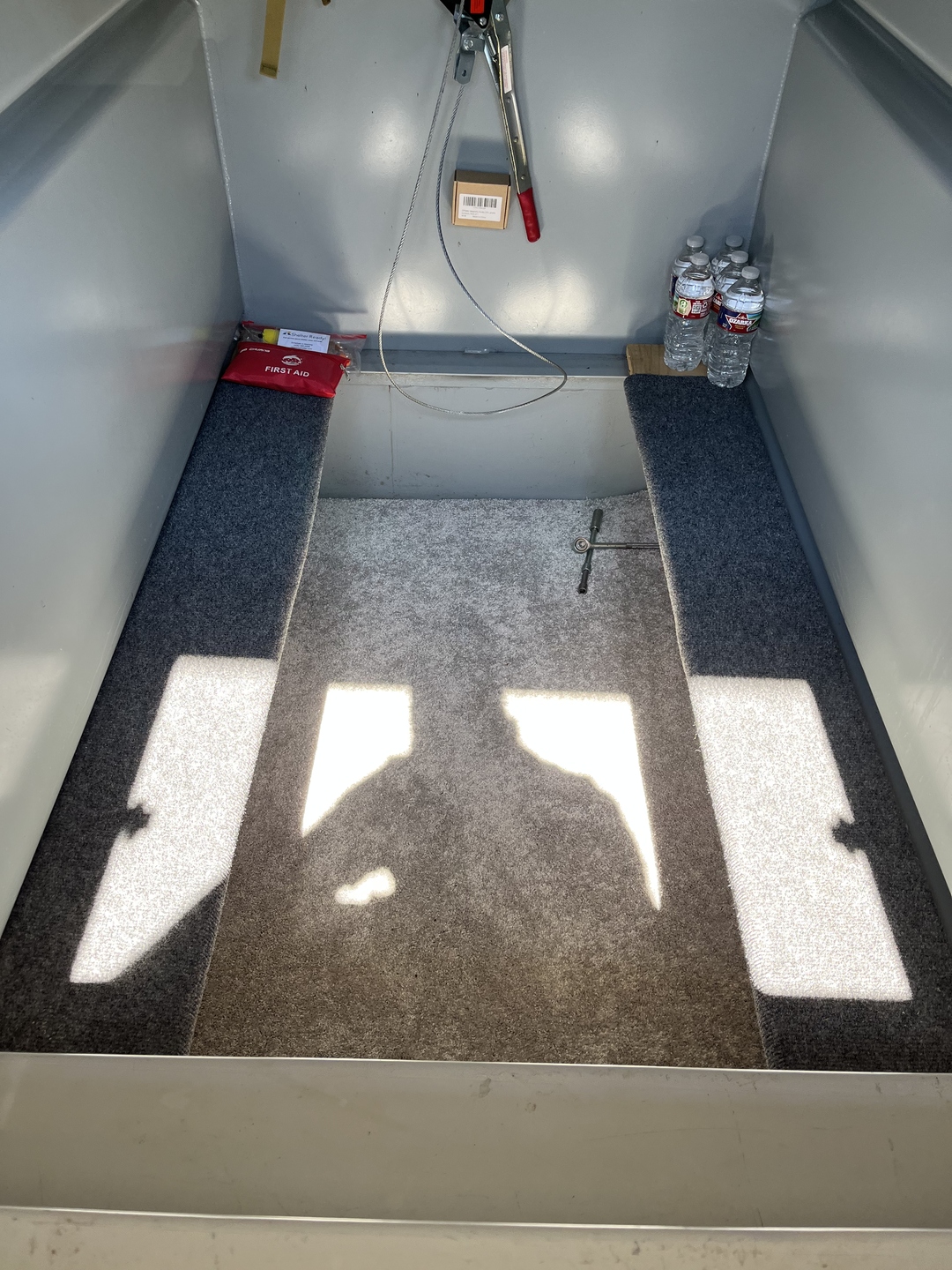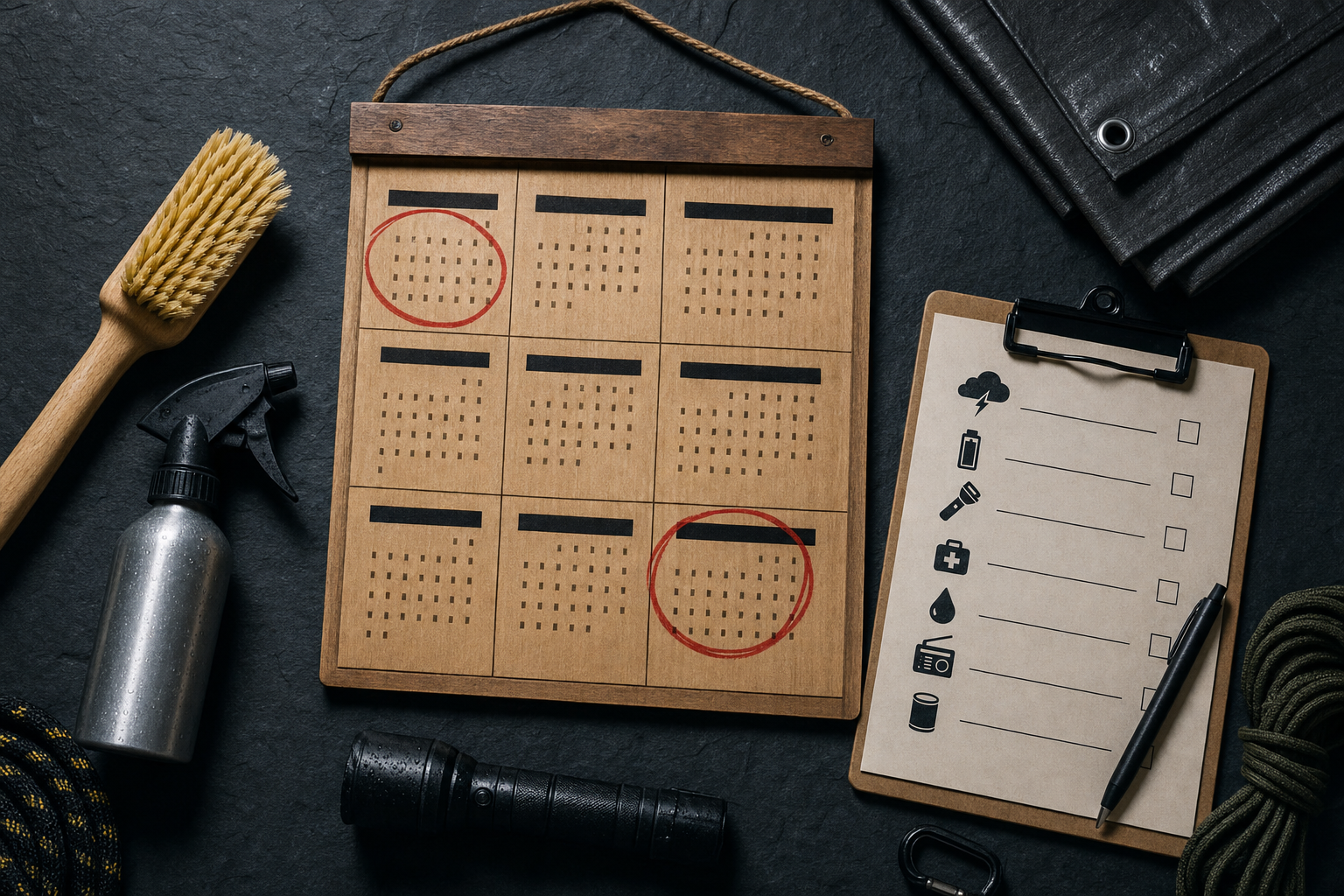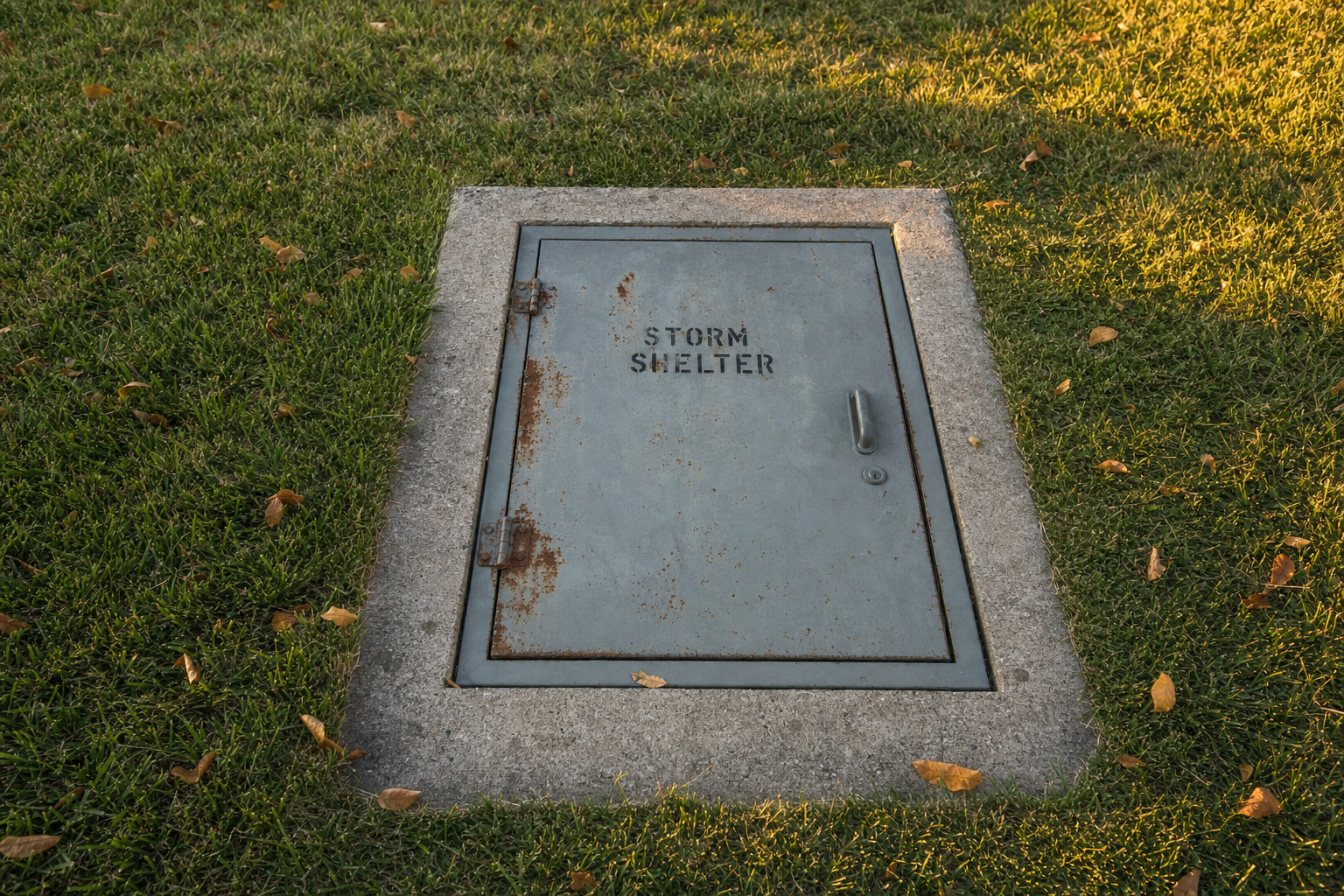
A fully-stocked storm shelter should include: 1 gallon of water per person per day (3-day minimum), non-perishable food, NOAA weather radio, flashlights and batteries, first aid kit, whistles, blankets, hygiene supplies, documents in a waterproof container, and a charged power bank. Rotate supplies every 6-12 months.
If you only do one thing after reading this post, do this: pull up the checklist below, walk to your storm shelter right now, and check what's actually in there. The number of shelters we open that contain a single empty water bottle and a 2017 flashlight is genuinely shocking.
Here's the complete emergency supplies checklist — built on FEMA and National Weather Service guidance, refined by 6+ years of cleaning Oklahoma shelters and seeing what people actually use (and don't use) during real storms.
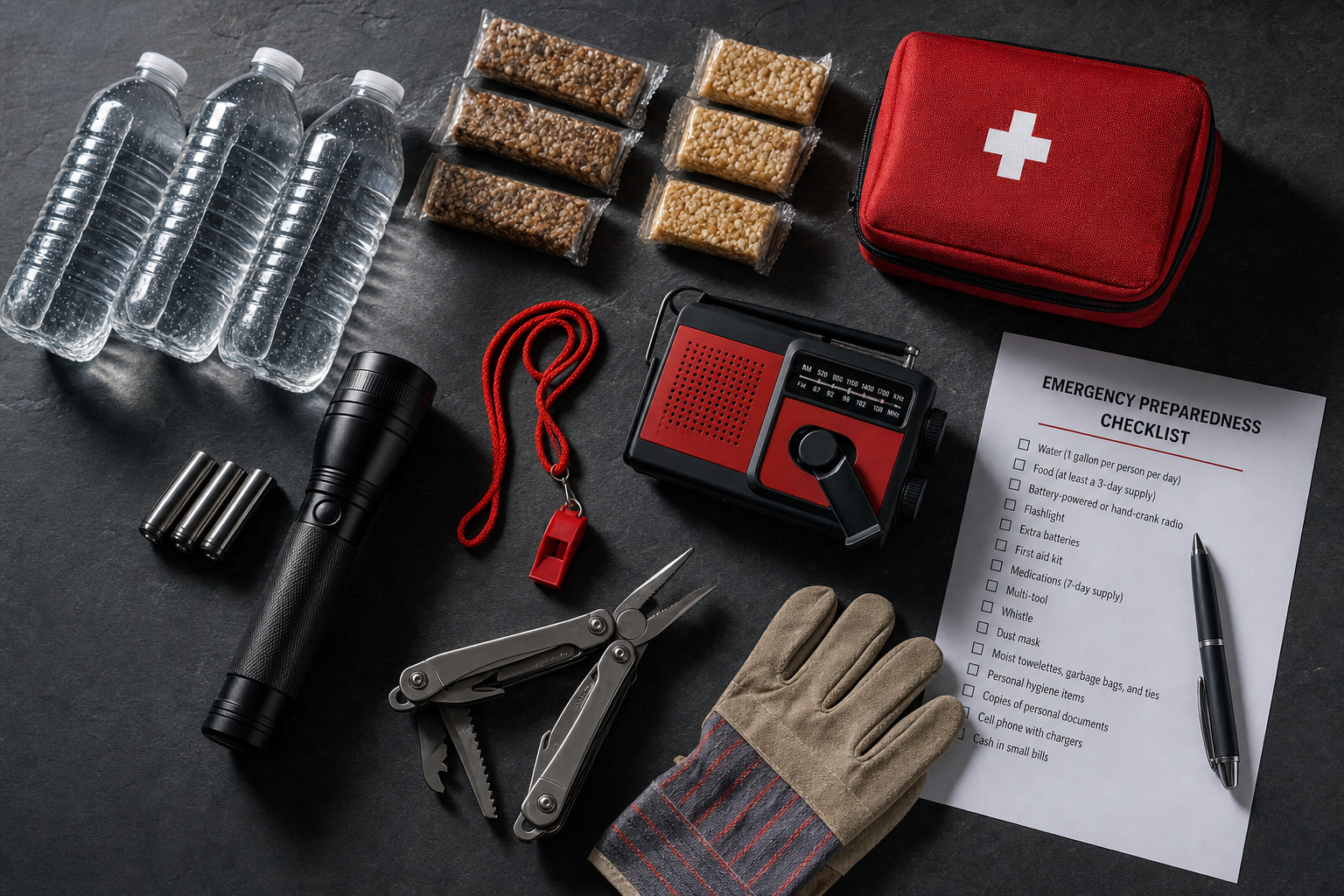
Water (The Single Most Important Supply)
FEMA's guidance is 1 gallon of water per person per day, minimum 3 days. Half is for drinking, half is for hygiene. Adjust upward for:
- Pets: Add 0.5 gallons per medium dog per day, 0.25 gallons per cat
- Hot weather: Increase by 25-50% in summer
- Pregnancy or illness: Increase by 25%
- Infants: Add formula water on top of base allocation
Store water in sealed plastic bottles. Avoid milk jugs (they degrade) and glass (breaks). Rotate every 12 months.
Food
Storm shelter food should be non-perishable, require no cooking, and be reasonably appealing to your family (especially kids). Good options:
- Protein bars and granola bars
- Jerky (beef, turkey)
- Peanut butter and crackers
- Trail mix, dried fruit, nuts
- Canned goods with pull-tops (chicken, tuna, beans) — include a can opener anyway
- Hard candy and electrolyte chews (good for kids' anxiety, fast energy)
- Infant formula and baby food, if applicable
- Pet food in a sealed container
Avoid: anything that requires cooking, refrigeration, or large amounts of water to prepare. No ramen, no oatmeal, no dehydrated meals unless you also pack a separate water supply for them.
Lighting and Communication
This is the gear that keeps you connected to the outside world when power fails:
- Battery-powered or hand-crank NOAA weather radio — must support SAME technology to receive local alerts
- Flashlights: One per person, ideally headlamps for hands-free use
- LED lantern — for general shelter lighting beyond personal flashlights
- Spare batteries for everything — store in a sealed container, check annually for leaks
- Fully-charged portable phone charger (power bank) — 20,000 mAh minimum for a family
- Charging cables for every device your family uses
- Whistles — one per person, on a lanyard, hung by the door
The whistle is more important than most homeowners realize. After a tornado, if your shelter entrance is blocked by debris and your phone is dead, a whistle is what gets rescuers to find you.
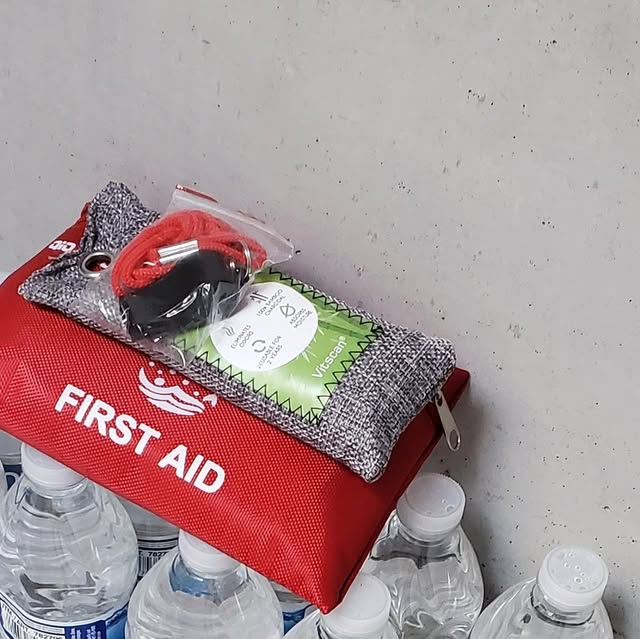
First Aid and Medical
- Complete first aid kit (bandages, gauze, tape, antiseptic, scissors, tweezers)
- Pain relievers (acetaminophen, ibuprofen)
- Antihistamines (Benadryl)
- Anti-diarrhea medication
- Prescription medications — minimum 7-day supply for every family member
- Inhalers, EpiPens, or other emergency devices if applicable
- First aid reference card or printed manual
- Disposable gloves and N95 masks
Need Help Building This Out?
Every Shelter Ready cleaning includes a complimentary first aid kit, flashlight, whistle, earplugs, and fresh water bottles. We'll also flag anything else that needs replacing.
Comfort and Hygiene
- One blanket or sleeping bag per person (vacuum-sealed to save space)
- Pillows or pillow substitutes
- Change of clothes for each person — include sturdy shoes for walking out through debris
- Rain ponchos
- Hand sanitizer and wet wipes
- Toilet paper and a small trash bag (or a 5-gallon bucket with a snap-on toilet seat for extended sheltering)
- Personal hygiene items (toothbrush, deodorant, feminine products)
- Earplugs — tornado sirens and storm noise are physically painful, especially for children
- Activities for kids (cards, small toys, coloring books — keeps them occupied and reduces anxiety)
Documents and Cash
Store in a waterproof and ideally fire-resistant container:
- Copies of driver's licenses, passports, social security cards
- Homeowners and auto insurance policy info
- Health insurance cards
- Property deed and recent property tax statement
- Bank account and credit card numbers (not full cards — just numbers and customer service phone numbers)
- Prescription list
- Emergency contact list (written on paper, not just in your phone)
- $200-500 in small bills — ATMs don't work without power
Tools and Safety
- Multi-tool (Leatherman or similar)
- Wrench or pliers (for turning off utilities)
- Work gloves
- Duct tape
- Heavy-duty trash bags (multi-purpose: trash, rain protection, waste containment)
- Dust masks or N95 respirators
- Whistle (mentioned above — worth repeating)
The Annual Rotation Schedule
The most common shelter mistake isn't not stocking it — it's stocking it once and never touching it again. Here's the schedule we recommend:
- Every 6 months: Check expiration dates on water, food, and medications. Replace anything expired.
- Every 12 months: Replace water entirely (even if not expired), rotate all food, check all batteries.
- Every 2-3 years: Replace first aid kit contents entirely.
- Every annual cleaning: Review the entire checklist with fresh eyes.
The Quick Audit: 10 Questions to Ask Yourself
Walk to your shelter, open the door, and answer these:
- Do I have at least 12 gallons of water for a family of 4?
- Is my food less than 12 months from purchase?
- Does my flashlight turn on right now?
- Do I have a NOAA weather radio (not just a phone weather app)?
- Are my prescription medications current?
- Do I have a whistle within reach of the entrance?
- Are my documents in a waterproof container?
- Do I have at least $100 cash on hand?
- If I had to spend 6 hours in this shelter with my family, would we be comfortable?
- Have I tested any of this in the last 12 months?
If you answered "no" to more than two, you have some work to do — and we can help.
Get a Fully Stocked, Ready-to-Use Shelter
Every Shelter Ready cleaning includes water, a first aid kit, flashlight, whistle, and earplugs. We'll also flag anything else you should add. Book online today.
Frequently Asked Questions
What emergency supplies should be in a storm shelter?
Every storm shelter should be stocked with: 1 gallon of water per person per day (minimum 3 days), non-perishable food, a battery-powered NOAA weather radio, flashlights and extra batteries, a first aid kit with prescription medications, a whistle for each person, blankets, hygiene supplies, important documents in a waterproof container, and a fully-charged portable phone charger.
How much water should I store in my storm shelter?
FEMA recommends one gallon of water per person per day, with at least a 3-day supply. For a family of four, that's a minimum of 12 gallons. Increase the amount if you have pets, infants, or live in a hot climate.
How long do emergency water and food supplies last in a storm shelter?
Sealed bottled water typically lasts 1-2 years before the bottles degrade. Non-perishable shelter food (protein bars, jerky, canned goods with pull-tops) lasts 1-5 years depending on the item. We recommend rotating both every 6-12 months — check expiration dates during annual cleanings.
Do I need a generator in my storm shelter?
No — generators should not be operated in or near a sealed shelter because of carbon monoxide risk. Instead, focus on battery-powered alternatives: hand-crank radios, LED lanterns, and portable phone chargers (power banks). Solar-powered chargers are also a good option.
What documents should I keep in my storm shelter?
Keep copies (or originals in a waterproof container) of: driver's licenses, passports, social security cards, homeowners and auto insurance policies, property deed, recent tax returns, bank account and credit card numbers, prescriptions, and an emergency contact list. Add a small amount of cash since ATMs don't work without power.