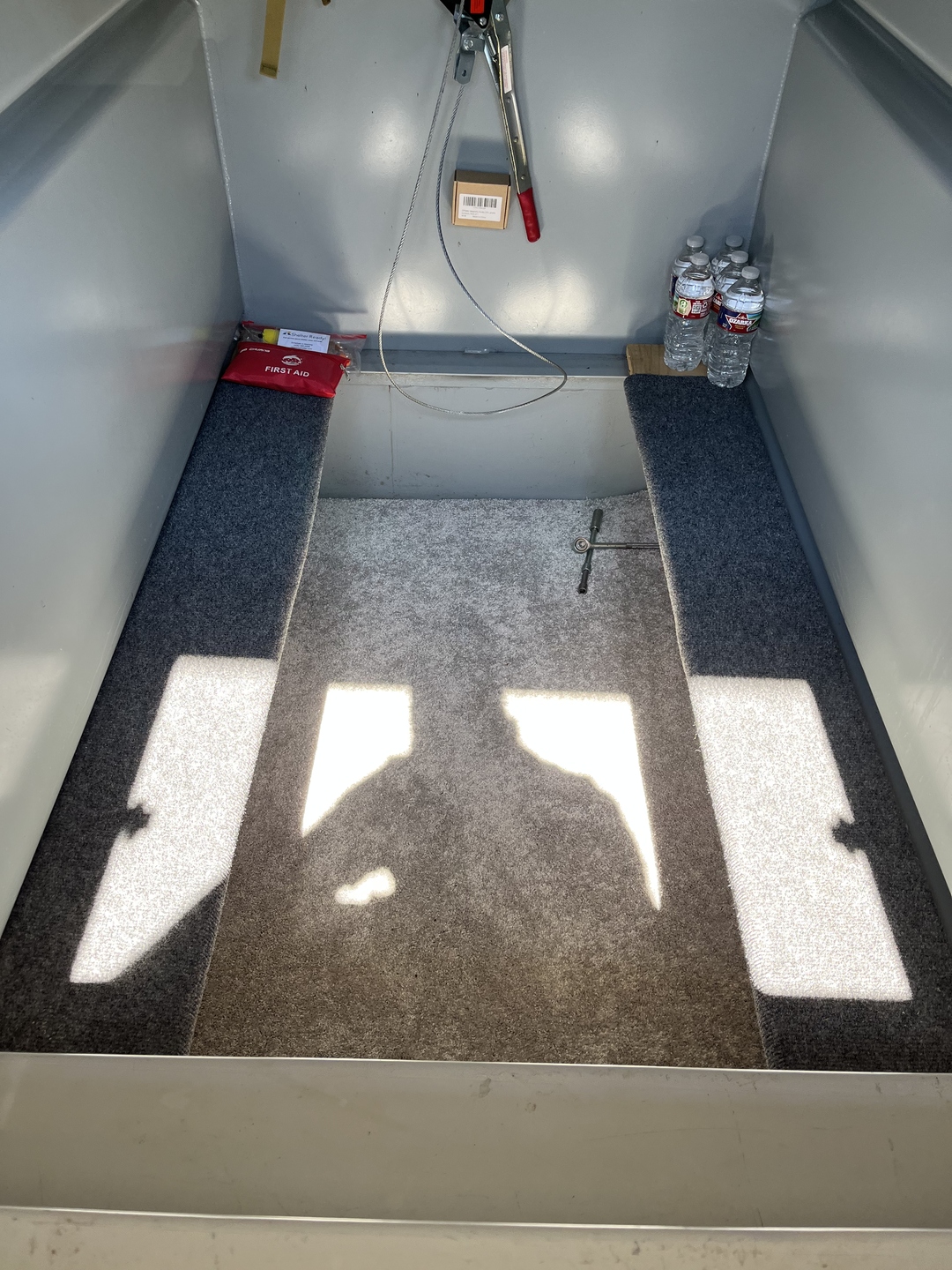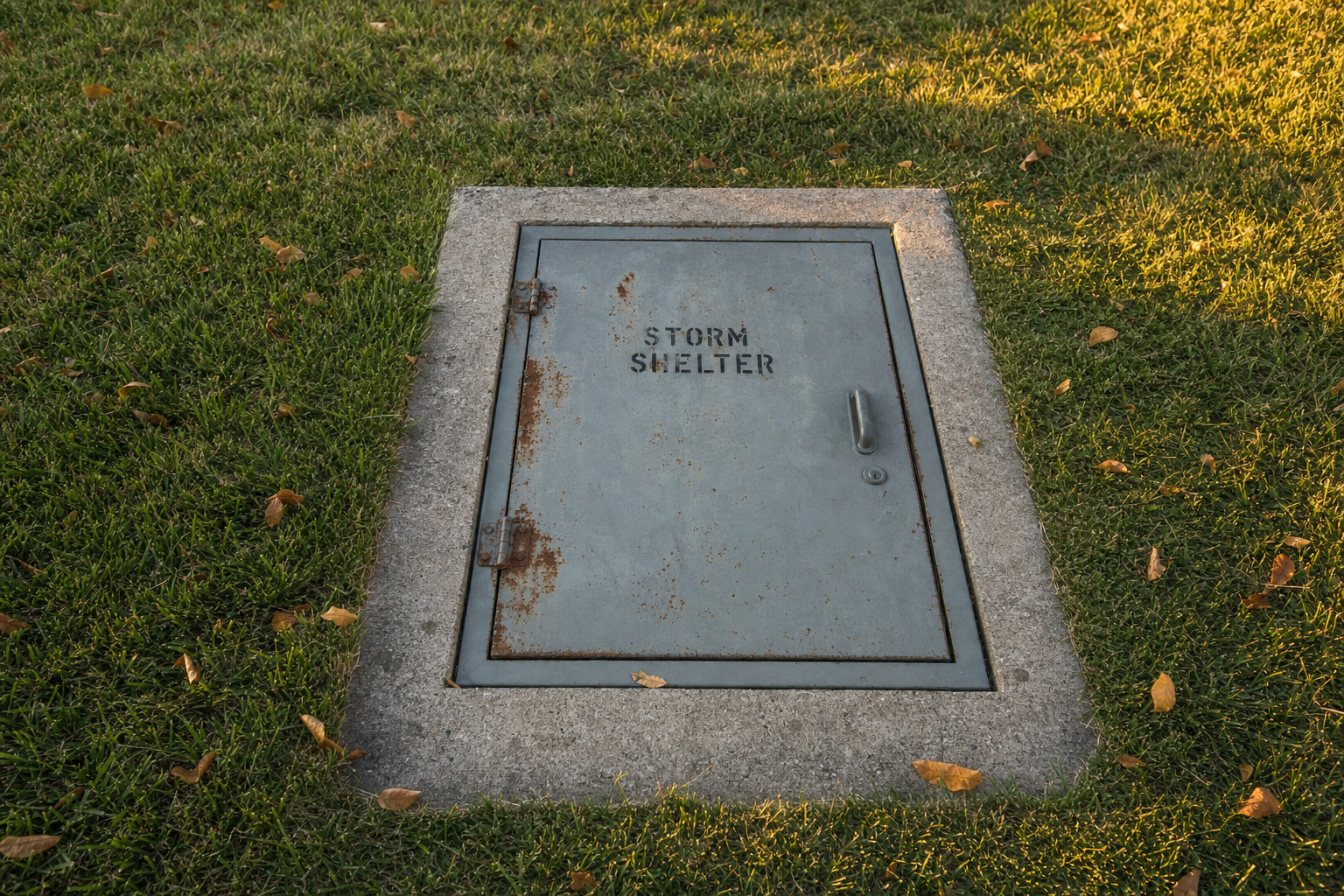
Organize your storm shelter using a 5-zone system: supplies, lighting and communication, comfort, documents, and a clear central seating area. Store everything in labeled, stackable, watertight containers along the walls — never in the middle. Plan for 6-10 square feet of clear floor space per person.
A clean shelter is only useful if you can actually find what you need when the sirens are going off. We've cleaned thousands of shelters and the difference between a "good" organized shelter and a chaotic one usually comes down to a few simple principles.
Here's the organizing system we recommend to every customer — based on what actually works during a real storm event, not what looks pretty in a magazine.
The 5-Zone Storm Shelter Organization System
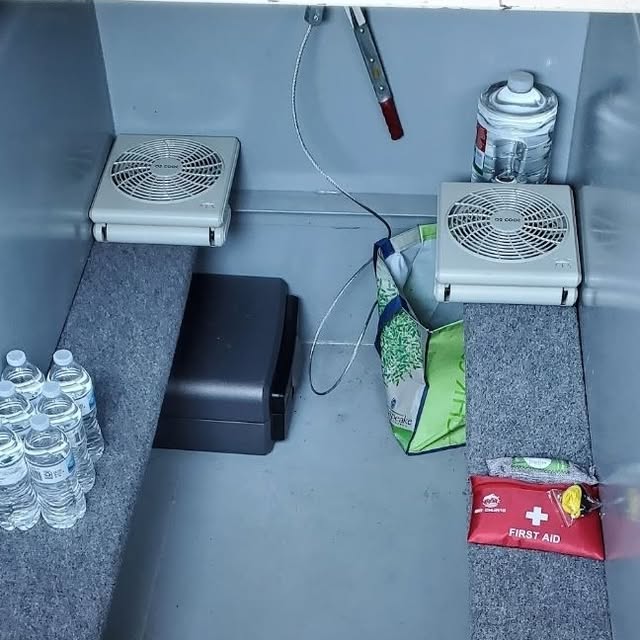
Zone 1: Supplies (Water, Food, First Aid)
This is your highest-priority zone. Keep:
- Water: 1 gallon per person per day, minimum 3 days. Stored sealed in plastic bottles or jugs.
- Food: Non-perishable, no-cook items only — protein bars, jerky, peanut butter, dried fruit, nuts.
- First aid kit: Stocked and updated annually. Include medications for at least 7 days.
Store this zone in clear stackable bins on a shelf at adult eye level. Label them WATER, FOOD, and FIRST AID on the front and top.
Zone 2: Lighting and Communication
Power will likely fail before, during, or after a tornado. This zone keeps you connected and visible:
- Battery-powered or hand-crank NOAA weather radio
- One flashlight per person (headlamps are even better — hands stay free)
- Extra batteries in a sealed container
- Portable phone charger (fully charged, with the right cables)
- Whistle for each family member (to signal rescuers if the entrance is blocked)
Store this at the front of the shelter at eye level — the first thing you grab when you enter.
Zone 3: Comfort
People underestimate how long they might be in a shelter. Comfort items matter:
- Blankets — one per person, vacuum-sealed to save space
- Pillows or pillow-substitutes
- Small toys, books, or card games for children
- A roll of paper towels and a small trash bag
- Personal hygiene items (wipes, toilet paper, hand sanitizer)
Comfort items go in a softer bin on the side — accessible but not blocking critical supplies.
Zone 4: Documents
If your house is damaged or destroyed, the documents in your shelter may be the only copies you have. Store in a waterproof, fire-resistant container:
- Driver's licenses, passports, social security cards (copies, not originals — or originals if you're confident in the container)
- Insurance policies (homeowners, auto, health)
- Property deed and recent tax records
- List of bank account and credit card numbers
- A small amount of cash (ATMs don't work without power)
- Emergency contact list — written on paper, not just in your phone
Need Help Setting Up Your Shelter?
Every Shelter Ready cleaning includes supply restocking and organization help. Tell us what you have, and we'll help you get it set up properly during the visit.
Zone 5: Clear Central Seating Area
This is the zone everyone forgets — and it's the most important. The center of your shelter should be empty. No bins, no supplies, no obstacles. Just open floor where your family (and possibly your pets) will actually sit during the storm.
Plan for 6-10 square feet of clear floor space per person. A family of four needs 24-40 square feet of open center. If your shelter is so packed with supplies that you have to clear a path to sit down, you've over-stocked.
What NOT to Do
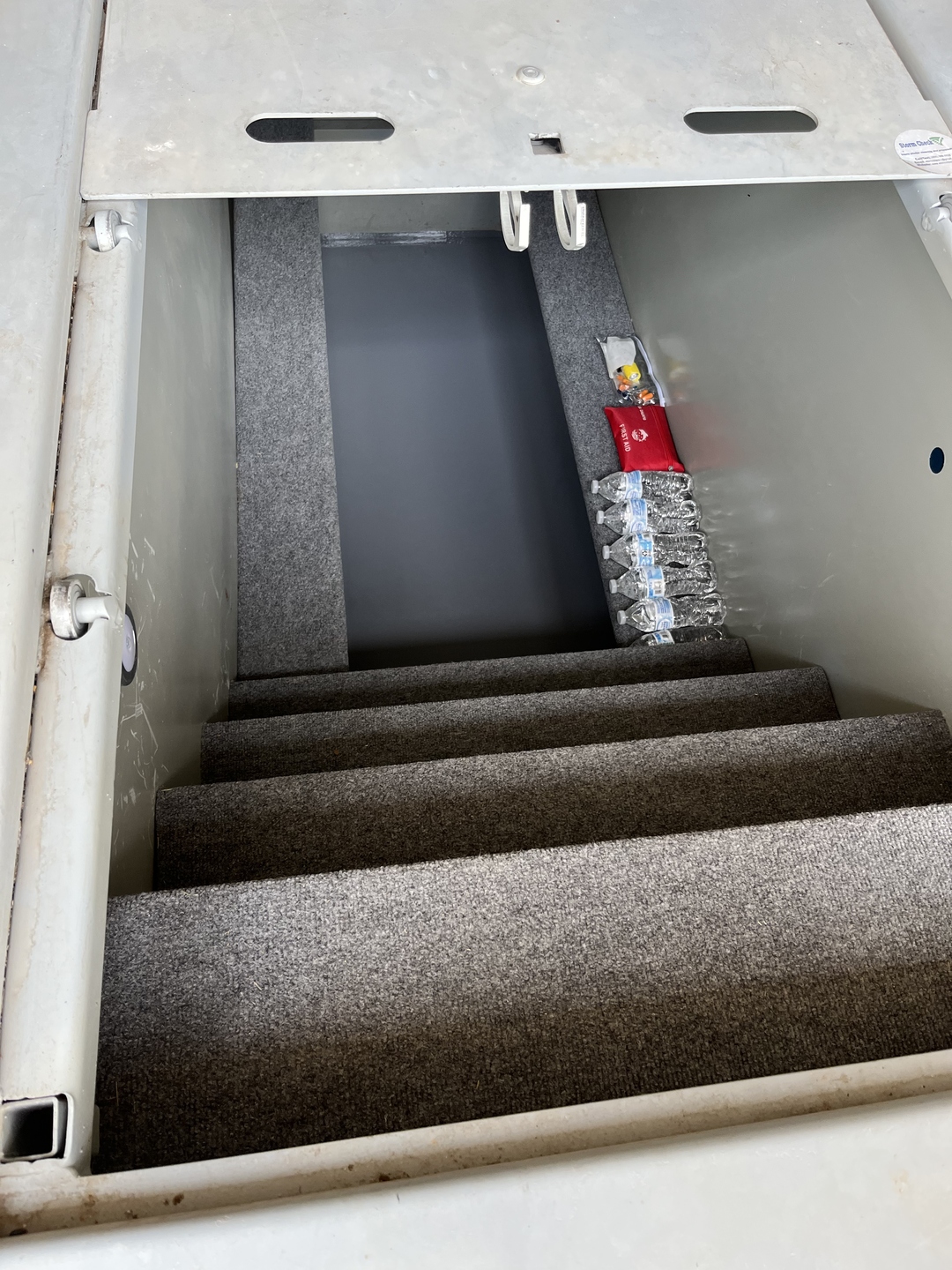
- Don't pile supplies on the floor. They block your seating area and they get destroyed if water gets in.
- Don't store anything on top of the door. If the latch fails, you don't want to be moving boxes during a tornado.
- Don't use cardboard. It absorbs moisture, attracts pests, and falls apart when wet.
- Don't overstock. A shelter packed wall-to-wall is harder to use than a shelter with a clear floor and just the essentials.
- Don't forget you have to actually get in. Keep the entry path clear at all times — supplies should never block the door or stairs.
Special Considerations for Pets
If your family includes pets, plan a pet zone:
- A small carrier or mat for them to settle on
- A leash hung on the wall (so it can't be misplaced)
- A small water bowl and a baggie of food
- One familiar comfort item (toy, blanket)
For in-ground shelters with steep stairs, older dogs, small dogs, and cats often can't manage entry safely on their own. Plan ahead — a small soft-sided carrier you can lower in, or a sturdy folded blanket to set them on, works well for most pets. For cats especially, having a carrier already in the shelter saves valuable seconds when a warning hits.
The Quick "Is My Shelter Organized?" Test
Open your shelter door. Without going inside, ask yourself:
- Can I see the floor where I'd sit?
- Can I identify where the flashlight is from the doorway?
- If I had 60 seconds to grab my kids and get inside, would I be able to do it without moving anything?
- If the power was out, could I find the radio in the dark?
- Is everything in containers, not loose?
If you answered "no" to any of those, your shelter needs reorganization. The good news: it's usually a 30-minute project.
Get Your Shelter Truly Ready
A clean, well-organized shelter is the foundation of family safety. Book a Shelter Ready cleaning and we'll help organize it properly during the visit.
Frequently Asked Questions
What's the best way to organize a storm shelter?
Organize your storm shelter using a 5-zone system: a supplies zone (water, food, first aid), a lighting and communication zone (flashlights, radio, batteries), a comfort zone (blankets, pillows, activities), a documents zone (waterproof container with important papers), and a clear central seating area. Use labeled, stackable, watertight containers along the walls — never block the entry path.
Where should I store emergency supplies in a storm shelter?
Store supplies along the walls or on shelving — never on the floor or in the center of the shelter. Keep frequently-used items (flashlights, radio, first aid) at eye level for fast access. Heavier items go on the bottom. Important documents go in a waterproof, fire-resistant container.
How much room should I leave for people in a storm shelter?
Plan for roughly 6-10 square feet of clear floor space per person. Storage should be against the walls, leaving the center open for everyone to sit or kneel. Don't overstock — a shelter packed wall to wall with bins becomes useless during an actual emergency.
What containers are best for storing supplies in a storm shelter?
Use clear, lidded, stackable plastic bins with snap-on lids — clear so you can see contents at a glance, lidded to keep moisture and pests out, stackable to maximize wall space. Label each bin on the front and top so you can identify them even if stacked.
Should pets have their own area in a storm shelter?
Yes — if you bring pets into your shelter, designate a corner or small area for them with their leash, a carrier or mat, water, and a familiar item. For older or smaller pets, plan ahead for how they'll get down steep shelter stairs safely — a folded blanket or a small carrier you can lower in works well.